


Why Hand-Pulled Noodles Are Having a Moment in Home Kitchens
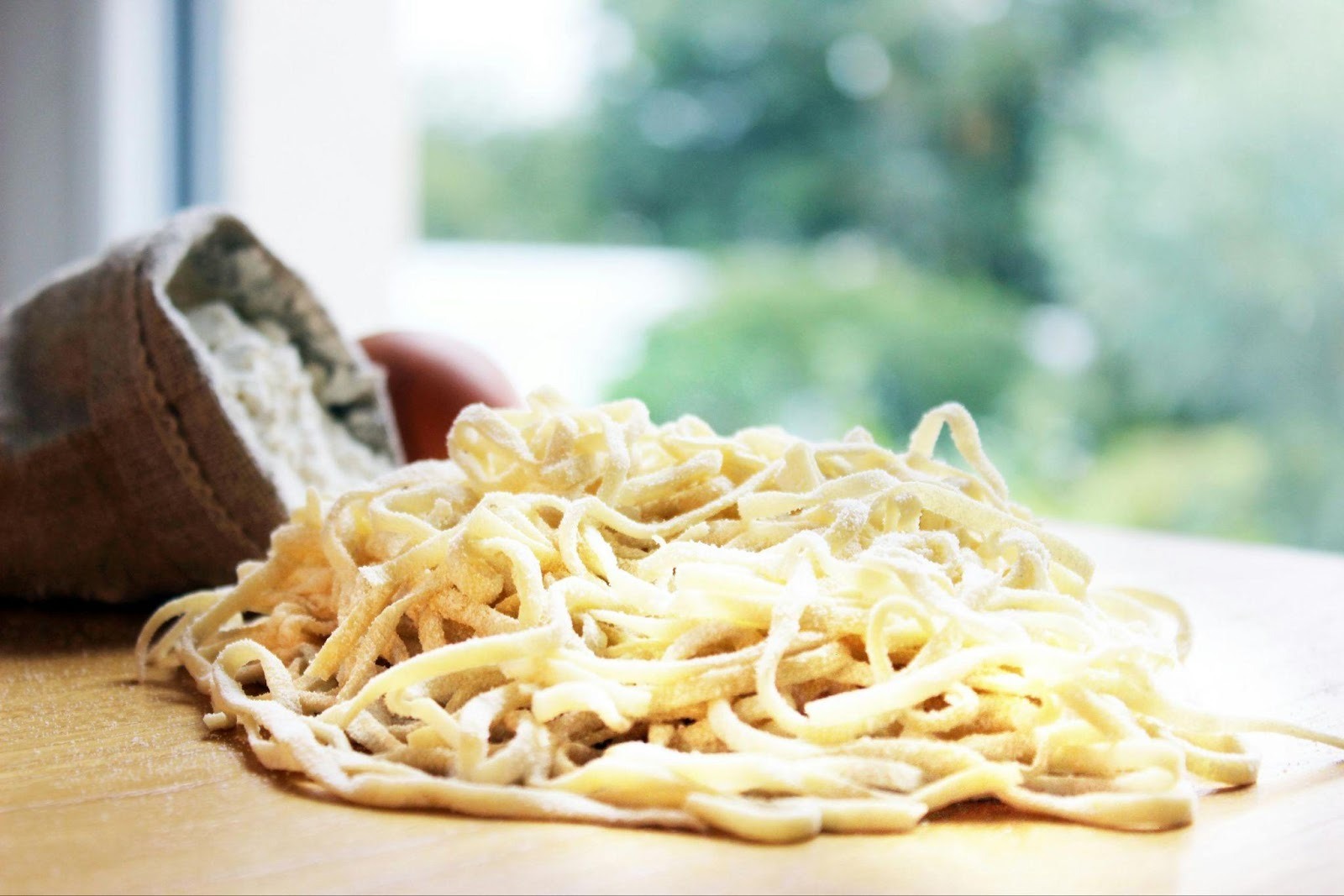
Hand-pulled noodles might seem like something best left to restaurant professionals; the kind of culinary feat that requires years of training and a special touch. But home cooks everywhere are discovering a liberating truth: making fresh, chewy noodles from scratch is far more accessible than it appears.
The appeal is undeniable. There's something deeply satisfying about transforming flour, water, and salt into bouncy, springy strands that outshine anything you'll find in the grocery aisle. Whether you're craving a steaming bowl of noodle soup or a boldly spiced stir-fry, hand-pulled noodles bring an authenticity and texture that elevates any dish. This guide breaks down the essentials, proving that this ancient technique belongs in modern home kitchens.
1. A Texture That Store-Bought Can't Match
The most compelling reason to make hand-pulled noodles at home? The texture is incomparable. These noodles offer a delightful chewiness and stretchiness that packaged alternatives simply cannot replicate. The intricate stretching and folding process creates a more tender yet resilient bite, while machine-made noodles tend to be firmer and less flavorful.
This isn't just about taste; it's about mouthfeel. Fresh hand-pulled noodles have a springy quality that allows them to absorb sauces and broths beautifully, making every bite more satisfying. Once you've experienced the difference, returning to dried pasta feels like a compromise.
2. Surprisingly Simple Ingredients
Here's what surprises most first-time noodle makers: you need just three or four basic ingredients. Flour, water, salt, and sometimes a touch of oil are all it takes to create restaurant-quality noodles at home.
The key is choosing the right flour. Flour with a medium level of gluten works best for hand-pulled noodles—look for a protein content of around 10-11g per 100g. Bread flour is a solid choice, providing the structure needed for stretching without making the dough too tough to work with.
The simplicity of the ingredient list, however, means there's nowhere to hide. It's the quality that matters, and technique is everything.
3. Mastering the Technique
The process of making hand-pulled noodles can be broken down into manageable steps that any home cook can follow with practice.
Mixing and kneading: Start by combining your flour with warm water and salt, then knead until you have a smooth, cohesive dough. This initial work develops the gluten structure that makes stretching possible.
Resting: This step is non-negotiable. Allow your dough to rest for at least two hours so the gluten fully relaxes. This makes the dough easier to stretch without snapping back. For best results, you can even prepare the dough the night before.
Shaping and pulling: Roll out your dough into flat strips, then use a combination of stretching and slapping against your work surface to elongate the noodles. The slapping motion isn't performative; it helps extend the dough evenly.
Different styles require different approaches. Lanzhou-style noodles demand more training to achieve those delicate, evenly pulled strands, while biang biang noodles offer a simpler technique: take a rectangle of dough, slap it to stretch, and then rip it in half. This makes biang biang noodles an excellent starting point for beginners.
Cook your noodles immediately after pulling for the best texture—fresh noodles are meant to go straight from your hands to the boiling water.
4. Recipes Worth Trying
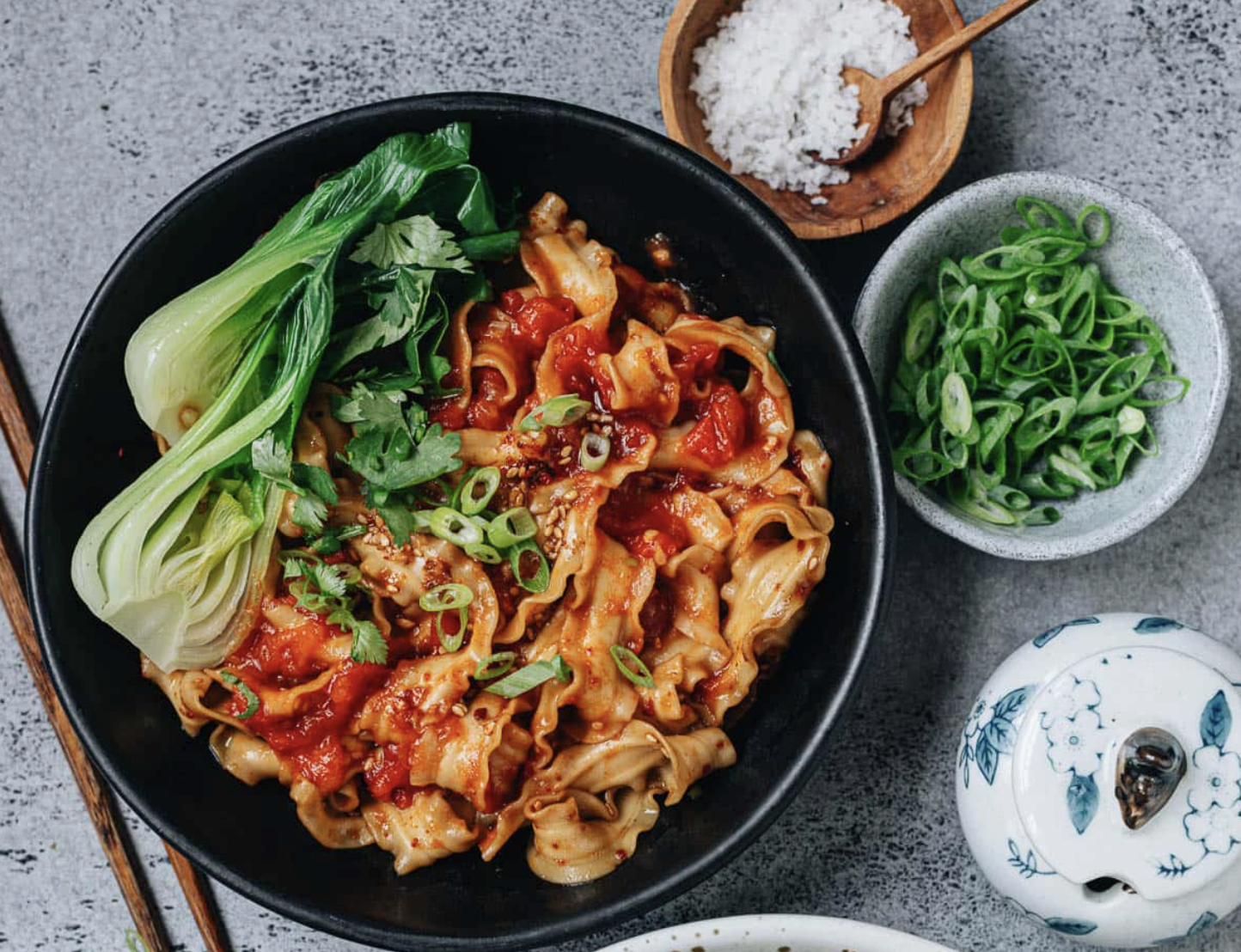
The beauty of hand-pulled noodles lies in their versatility. Serve them in rich broths, toss them with vegetables and tender meat, or coat them in a bold, spicy sauce.
Biang Biang noodles are an ideal introduction to hand-pulled noodle cooking. These wide, chewy noodles from China's Shaanxi province get dressed in a sauce of soy sauce, Chinkiang vinegar, sugar, and sesame oil, layered with garlic and green onion. The magic happens when you pile chili flakes, sesame seeds, cumin, and Sichuan peppercorns on top, then drizzle hot oil over everything—the sizzle and fragrance are unforgettable. Finished with blanched bok choy and fresh cilantro, it's a complete meal that showcases what homemade noodles can do.
For something more comforting, try your noodles in a Taiwanese beef noodle soup, where the chewy strands soak up a rich, aromatic broth. Or keep things quick with a spicy garlic noodle stir-fry that comes together in minutes and lets the fresh noodle texture shine.
Final Thoughts
With just a handful of ingredients and some patience, you can create noodles that are fresher, chewier, and more satisfying than anything you'll find in a package. The technique may take practice, but even imperfect homemade noodles carry a charm and flavor that store-bought versions simply cannot replicate. So clear some counter space, dust your hands with flour, and discover why this ancient craft is finding new life in kitchens everywhere.