


A Mediterranean Skillet Supper with Lemon, Herbs, and Orzo
Weeknight dinners feel easier when one satisfying dish brings together protein, vegetables, and a comforting grain. This Mediterranean inspired skillet combines juicy shrimp, tender orzo, sweet tomatoes, and bright herbs without requiring an elaborate cooking session. It feels special enough for company but practical enough for a Tuesday, especially when everyone is hungry and the kitchen needs to stay manageable.
The appeal comes from contrast. Warm orzo absorbs a garlicky broth, zucchini adds freshness, and burst cherry tomatoes create their own light sauce. Lemon lifts the richer flavors, while a little feta provides a pleasantly salty finish. Instead of relying on heavy cream, this dinner builds depth through olive oil, careful seasoning, and ingredients that work naturally together.
Shrimp makes the meal particularly convenient because it cooks quickly and pairs beautifully with citrus and herbs. Still, timing matters: leaving it over the heat for too long can turn a delicate bite firm and chewy. Home cooks who want to understand how to cook shrimp can benefit from learning a few reliable signs of doneness before starting this easy skillet supper.
Why Orzo Works So Well
Although it resembles rice, orzo is a small pasta that becomes tender while remaining pleasantly substantial. Its shape catches the cooking juices and distributes flavors evenly through the skillet. Unlike longer pasta, it also mixes neatly with chopped vegetables and bite sized seafood, making every spoonful balanced. For a looser result, add a splash of warm broth just before serving.
Choose an orzo with a straightforward ingredient list, and check the package timing because brands vary. Vegetable or chicken broth adds savory notes, although water with sufficient seasoning works when the pantry is limited. A little reserved cooking liquid helps loosen the pasta later without introducing unnecessary richness.
Gather Ingredients with Different Textures
For four servings, plan on one pound of peeled, deveined shrimp, one cup of dry orzo, one medium zucchini, and about two cups of cherry tomatoes. You will also need three garlic cloves, a small shallot, olive oil, one lemon, low sodium broth, parsley, oregano, and a modest handful of crumbled feta. Keep salt, black pepper, and optional chili flakes nearby.
Choose medium or large shrimp for a pleasing balance between tenderness and a satisfying bite. Frozen shrimp are perfectly practical when thawed safely in the refrigerator or under cold running water. Pat them dry thoroughly before seasoning; excess surface moisture prevents attractive browning and can water down the sauce.
Build the Flavor in Stages
Start by chopping the zucchini into small half moons, halving the tomatoes, and finely mincing the shallot and garlic. Warm a large skillet over medium heat with a tablespoon of olive oil. Add the shallot and zucchini, stirring occasionally until the vegetables begin to soften and take on some color. Stir in the garlic and oregano for the final thirty seconds so their fragrance develops without burning.
Add the dry orzo and stir briefly to coat the grains in the seasoned oil. Pour in roughly two and a half cups of warm broth, then bring the mixture to a gentle simmer. Stir occasionally to prevent sticking. Add a little more liquid if needed, and cook until the orzo is tender but not mushy. Fold in the tomatoes near the end so they soften while retaining their shape.
Give the Seafood Its Own Moment
For the best texture, prepare the shrimp separately while the orzo simmers. Season lightly with salt and pepper, then heat another skillet with olive oil over medium high heat. Arrange the shrimp in one layer rather than piling them together. Let the first side sear undisturbed, then turn each piece once. Depending on size, cooking usually takes only a few minutes.
Watch for flesh that changes from translucent to opaque and verify that the center reaches 145 degrees Fahrenheit. A loose curved shape is another useful clue, but appearance alone is less reliable than temperature. Remove the shrimp promptly and finish with lemon zest and a squeeze of juice. These simple habits explain why learning how to cook shrimp is so useful for busy home cooks preparing mixed dishes.

Bring Everything Together
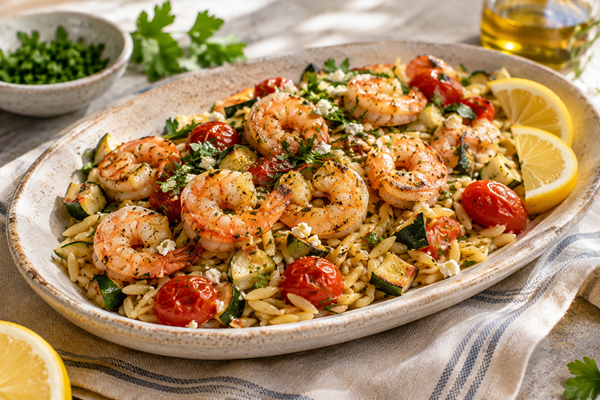
When the orzo is ready, turn off the heat and stir in chopped parsley, a little lemon juice, and the remaining olive oil. Taste before adding more salt because broth and feta already contribute seasoning. Spoon the warm orzo onto a platter, arrange the shrimp over the top, and scatter feta and extra herbs across the surface. Serve with lemon wedges so everyone can adjust the brightness.
Make It Your Own
This flexible dinner welcomes small changes. Swap zucchini for asparagus during spring, use spinach when the refrigerator needs clearing, or add chopped roasted peppers for a sweeter flavor. A pinch of smoked paprika creates warmth, while fresh dill provides a different herbal character. For a dairy free version, omit the feta and finish with toasted breadcrumbs for crunch. For a brighter presentation, scatter extra parsley just before bringing the platter to the table, and place a small bowl of lemon wedges beside it for easy effortless sharing.
Plan Ahead Without Losing Freshness
Vegetables can be chopped a day in advance, and the shrimp can thaw overnight in the refrigerator. Cook the orzo close to serving time because pasta continues absorbing liquid as it sits.
If preparing portions for later, refrigerate promptly in shallow containers and eat within three to four days. Reheat gently with a splash of broth until piping hot, avoiding prolonged heat that toughens the seafood.
A Relaxed Way to Serve
A simple green salad, crusty bread, or roasted broccoli makes an excellent partner, though the skillet already provides a complete meal. Set everything in the center of the table and let diners help themselves. The combination of citrus, tender pasta, vegetables, and seafood offers the generous, colorful appeal of a weekend dinner without demanding hours of preparation. It is exactly the kind of recipe worth keeping in regular rotation.